Same engineering underneath
Start with what is identical, because it removes most of the cost argument. Both chairs are moulded in one piece from virgin polypropylene. Both have no steel insert, no welded joint and no metal fastener. Both stack on standard trolleys, both take the same tie-on seat cushion, and both are available in the same gold, silver, white, black and crystal finishes, with champagne as an additional Phoenix finish.
In practical terms that means a fleet of both models shares spares, cushions, trolleys and cleaning routine. You are not maintaining two systems; you are maintaining one system in two shapes.
What changes is the silhouette
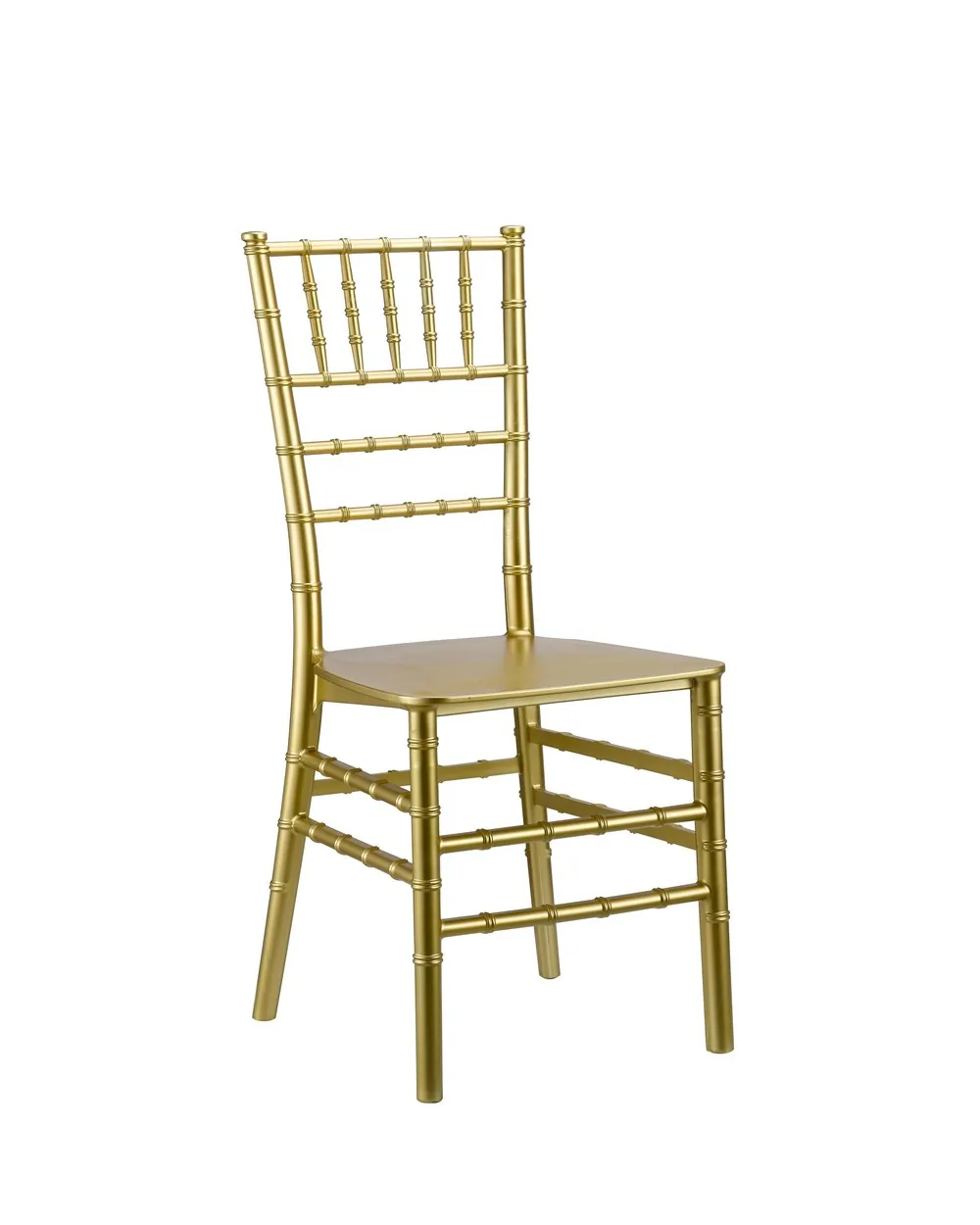
The Chiavari is the ladder back with bamboo-style spindles — a shape that has been in banquet halls for well over a century. It reads as traditional, formal and expected. Nobody has ever been surprised by a Chiavari, which is exactly why it is safe.
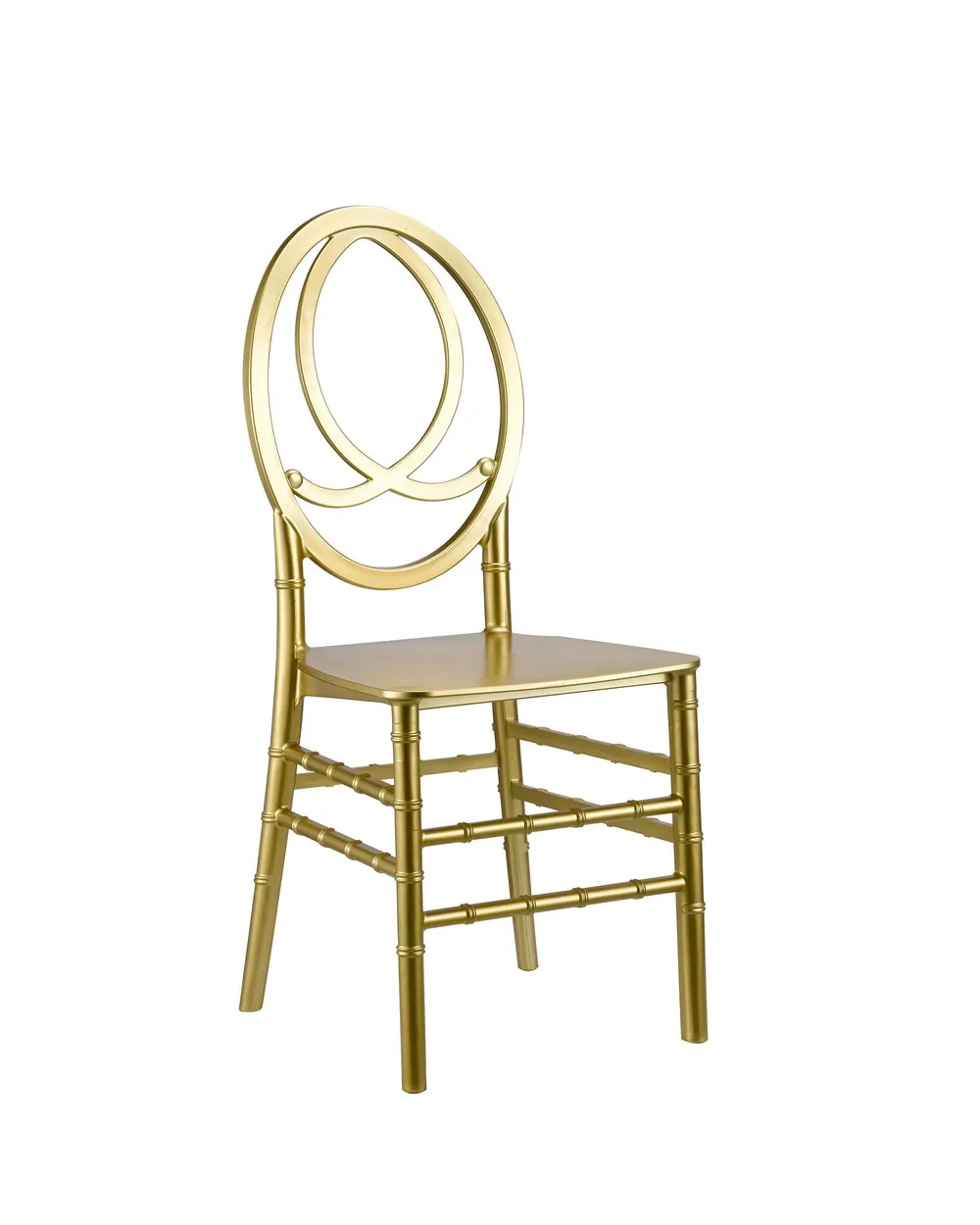
The Phoenix replaces the ladder with two interlocking open rings. The back is a continuous circular form rather than a row of verticals, so it photographs with a cleaner outline against uplighting and reads as contemporary. It is the model clients ask for when they want something their competitor's venue does not already have in the store room.
Both backs are structural rather than decorative — the ring on the Phoenix is part of the moulding, not an inserted component, so it holds its shape through stacking and handling.
| Chiavari | Phoenix | |
|---|---|---|
| Back design | Ladder back, bamboo-style spindles | Interlocking double-ring open back |
| Reads as | Traditional, formal, expected | Contemporary, design-led |
| Construction | One-piece PP moulding | One-piece PP moulding |
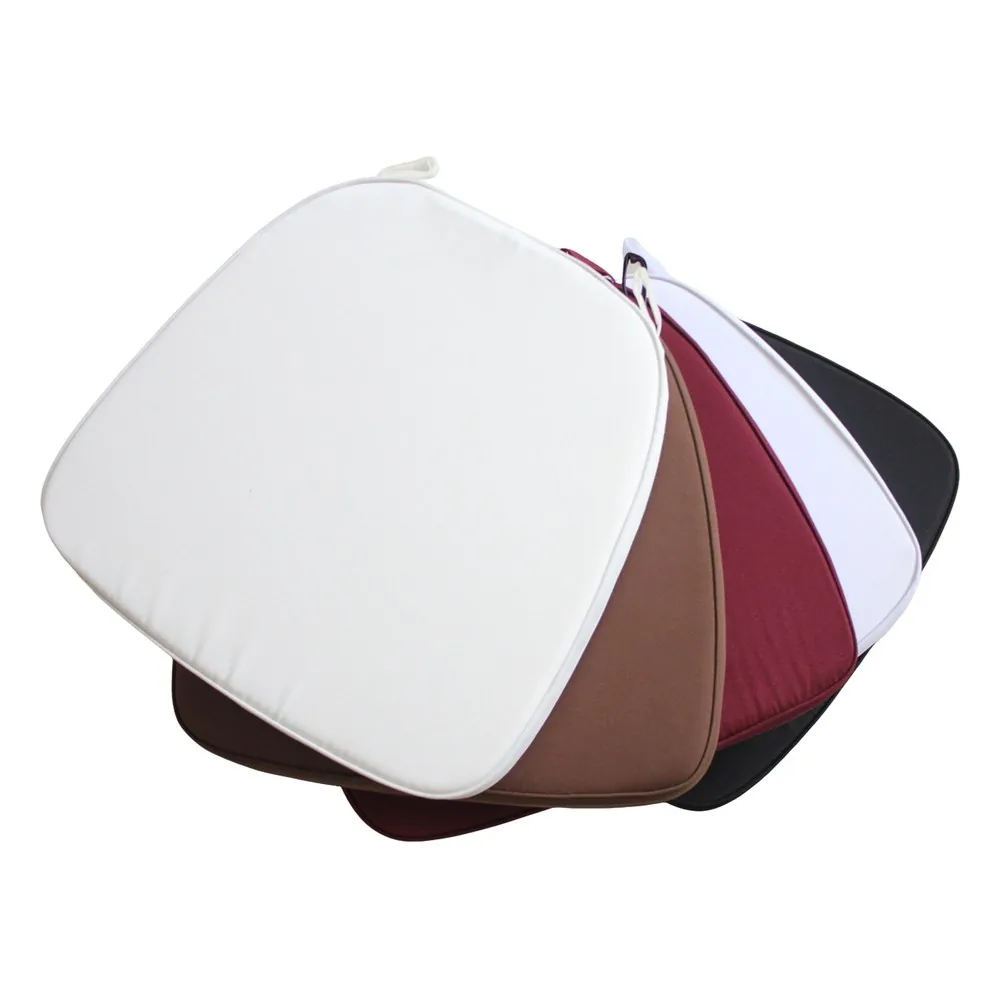
| Cushion fit | Standard tie-on | Standard tie-on — same cushion |
| Standard finishes | Gold, silver, black, white, crystal | Gold, champagne, silver, black, white, crystal |
| Best for | Volume weddings, hotels, classic venues | Design-led venues, top tables, brand events |
Which one your clients will ask for
The pattern we see across markets is fairly consistent. Established hotels, country clubs and traditional wedding venues specify Chiavari by name, because it is what their clients expect and what the room was designed around. Newer venues, boutique hotels and planners working on brand events ask for something with a visible point of difference — that is where the Phoenix wins.
If you are opening a rental business and can only buy one model, buy Chiavari. It is the chair that gets requested by name and the one a client will not question. If you already have a Chiavari fleet and your bookings have plateaued, adding Phoenix is usually the cheapest way to create a premium tier without changing your price list for the base product.
The mixed-fleet strategy
Most of our established customers run both. The split that works in practice is roughly 70–80% Chiavari and 20–30% Phoenix. The Chiavari carries the volume and the repeat business; the Phoenix goes to the top table, the ceremony entrance and the client who wants the room to look different from last season.
The economics work because the Phoenix can be sold at the same price as the Chiavari while occupying a premium slot in the client's mind. You are not buying a more expensive chair; you are buying a second product to offer.
Mixing within one order is straightforward: the minimum is 50 pieces per colour, and models and colours can be combined in the same container shipment.
Buyer's note: If your bookings are almost entirely traditional hotel and banquet work, 10–15% Phoenix is enough to test demand. If you do brand events or design-led weddings, go to 30%.
How to decide in one afternoon
Take the last twenty enquiries you quoted and count how many mentioned a specific style, and how many just said “banquet chairs”. The ones that specified a style are your Phoenix market. The ones that said “banquet chairs” are your Chiavari market, because that is the default the client already has in mind.
Then look at your top three competitors' websites. If all three show only a ladder back, a Phoenix in the room is a genuine differentiator. If they already offer round backs, the differentiator has to come from finish, cushion or service instead.
Frequently asked questions
Can Chiavari and Phoenix chairs be stacked together?
They stack on the same trolleys, but we recommend keeping them on separate stacks so a set does not get split between two jobs. Because both are moulded to the same seat height, mixed stacks are stable — the issue is operational, not structural.
Do they use the same cushion?
Yes. Both models take the same tie-on seat cushion, so one cushion inventory covers the whole fleet and you can move cushions between models without buying anything extra.
Is the Phoenix more expensive than the Chiavari?
They sit at the same price level, because both are one-piece PP mouldings with the same production process and similar material weight. The Phoenix is not a premium-priced product for us — it is a second silhouette from the same tooling approach.
Which model is more popular overall?
Chiavari, by a wide margin, because it is the chair clients ask for by name. Phoenix demand is growing and is strongest in design-led venues, boutique hotels and brand events. That is why most of our customers stock both rather than choosing one.
Can I order both models in one shipment?
Yes. The minimum is 50 pieces per colour, and models and colours can be combined within one container. Many first orders are a mixed pallet of Chiavari in two colours plus a smaller run of Phoenix for the premium tier.