What each material actually is
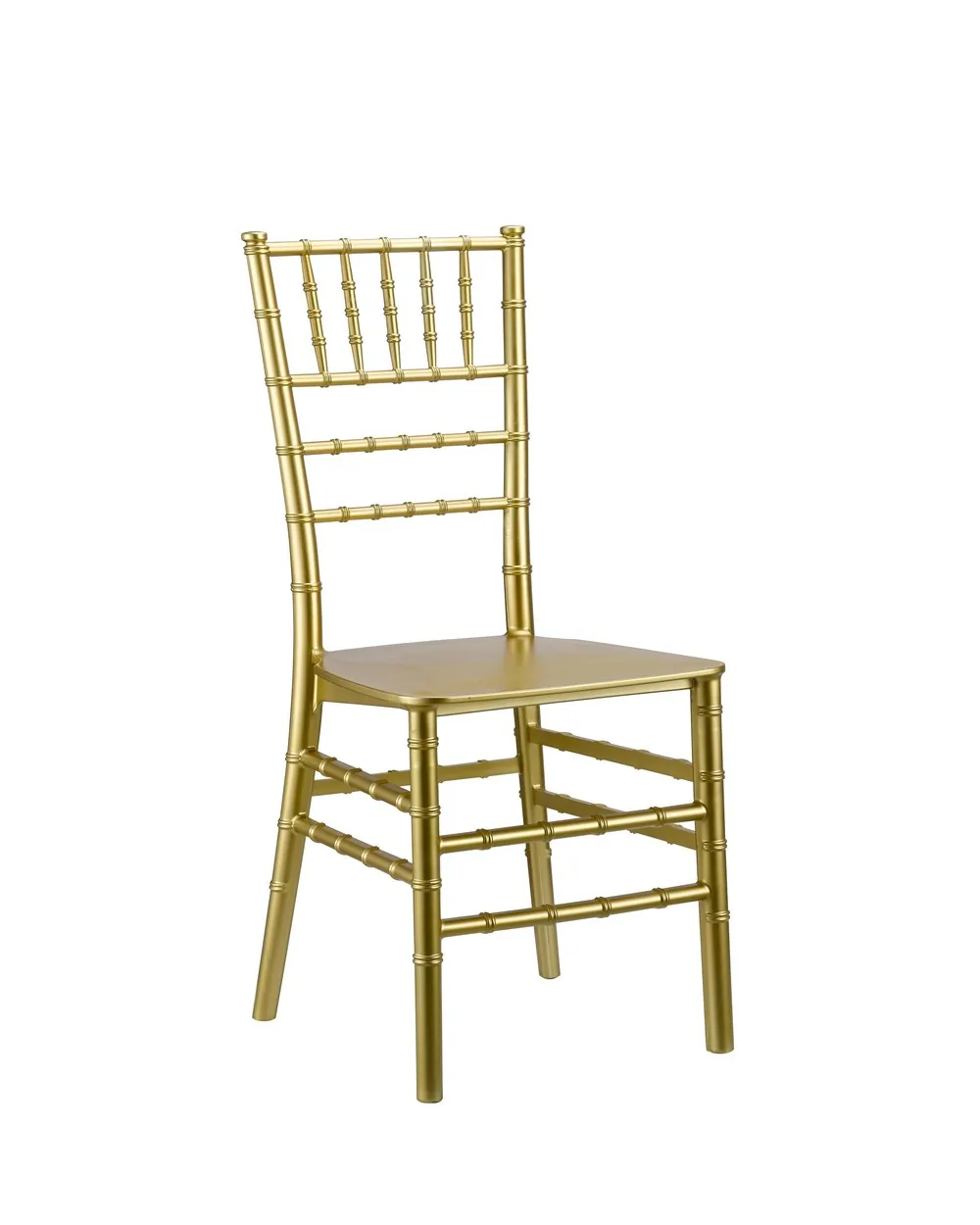
The word “Chiavari” describes a shape, not a material. The original 19th-century chair was carved from hardwood, and today the same silhouette is produced in polypropylene, hardwood, aluminium and steel. Buyers often compare them on unit price alone, which is the one number that tells you least about what you will spend over five years.
Polypropylene is a thermoplastic with a density around 0.91 g/cm³ — lighter than water. A chair frame is formed by injecting molten resin into a steel mould, so the seat, back and legs come out as a single continuous piece with no joints to work loose. Our Chiavari frame weighs approximately 4.5 kg and is moulded in one shot.
Hardwood chairs are built from separate components — turned legs, a bent back rail, spindles — joined with dowels, screws, glue or a combination. Hardwood is denser than PP (roughly 0.6–0.9 g/cm³ depending on species), and the frame needs a thicker cross-section to carry the same load, so a finished wooden Chiavari typically lands between 6 and 8 kg.
Aluminium and steel frames are welded or bolted tube constructions, usually powder-coated. Aluminium is about 2.7 g/cm³ and steel about 7.85 g/cm³, so metal chairs sit at the heavy end of the range. The frame is strong, but every weld and every bolt is a place where fatigue or corrosion can start.
The four costs that actually decide it
When we quote a rental company for 300 chairs, the conversation that matters is not the unit price. It is the total cost of keeping those 300 chairs in service. That number is made of four things.
- Unit cost — what you pay on the invoice. PP is usually the lowest, wood and metal higher.
- Breakage and repair — what you spend replacing and fixing. Wood splits and joints loosen; metal dents at the weld and corrodes where the coating chips; PP generally fails only under abuse, and a scuffed finish is cosmetic rather than structural.
- Storage density — how many chairs fit per square metre in your warehouse and per container on import. PP chairs stack deeper and more consistently because every frame comes off the same mould with identical tolerances. Wooden chairs vary slightly piece to piece, so stacks get shorter and less stable.
- Labour per changeover — how many staff-hours it takes to move 300 chairs in and out of a venue. Weight drives this directly: a 4.5 kg chair can be carried in stacks by one person, a 7 kg chair slows the same person down across a full evening.
| PP resin (one-piece moulded) | Hardwood | Aluminium / steel | |
|---|---|---|---|
| Typical chair weight | 4.5 kg | 6–8 kg | 5–9 kg |
| Joints to fail | None — single moulding | Dowels, screws, glue lines | Welds, bolts, rivets |
| Water and humidity | Unaffected | Swells, warps, finish lifts | Rusts if coating chips |
| Outdoor use | Suitable for events | Not recommended | Coating-dependent |
| Stack consistency | Identical — same mould | Varies piece to piece | Varies with weld distortion |
| Finish repair | Cosmetic only | Sanding and refinishing | Touch-up paint, then re-coat |
| Replacement batch match | Colour matched at the mould | Depends on timber batch | Depends on powder batch |
Indicative figures based on our own production and typical market values. Exact weights depend on model.
Where wood is still the right answer
We do not make solid hardwood chairs, and there are bookings where a wooden chair is genuinely better. If you supply heritage venues, vineyard weddings or stylists building a warm, rustic look, the grain and the weight of a real timber frame carry a credibility that a moulded finish does not fully reproduce. A wooden chair also photographs with a different quality of light on it.
The trade-off is maintenance. Wooden chairs need a dry store, periodic checks on every joint, and a touch-up budget. For a company that rents them out a few dozen times a year to premium clients, that is manageable. For a company running weekly volume events, it becomes a permanent second job.
Buyer's note: If your enquiries are mostly heritage and vineyard weddings, buy wood and budget for maintenance. If they are volume events and corporate work, wood will cost you more than it earns.
Where metal is still the right answer
Metal frames win on raw load capacity. If a venue needs chairs rated for very heavy guests, or the chairs will live outdoors for a season on a terrace, an anodised or well-coated metal frame is the safer specification. Metal also tolerates being dragged across rough surfaces in a way that resin will eventually mark.
What metal does not tolerate is a chip in the coating. Once moisture reaches bare steel, rust starts at the weld and spreads under the paint, and the chair is out of service until it is stripped and recoated. In a coastal or humid climate that cycle is short.
What we make, and why we do not make the other two
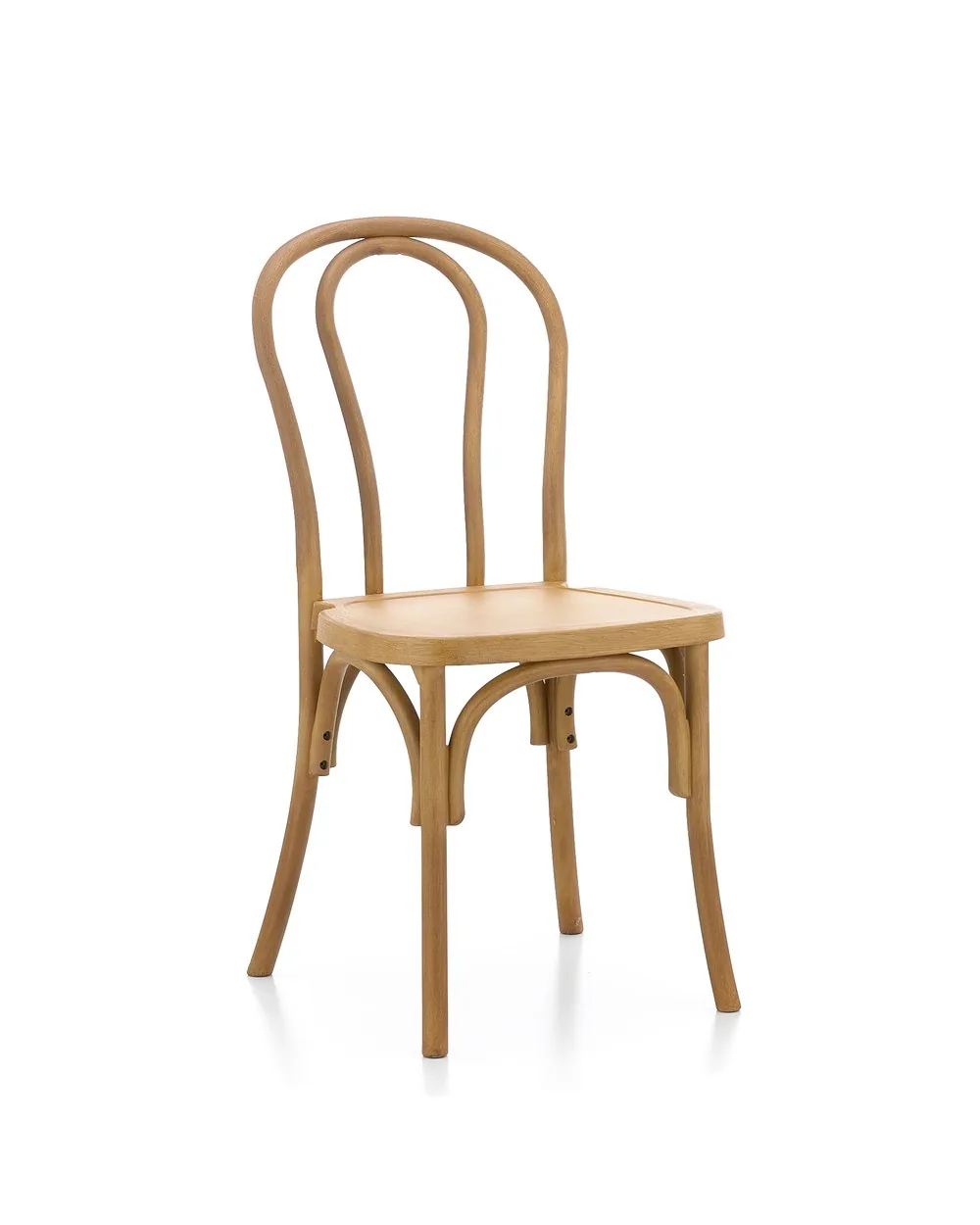
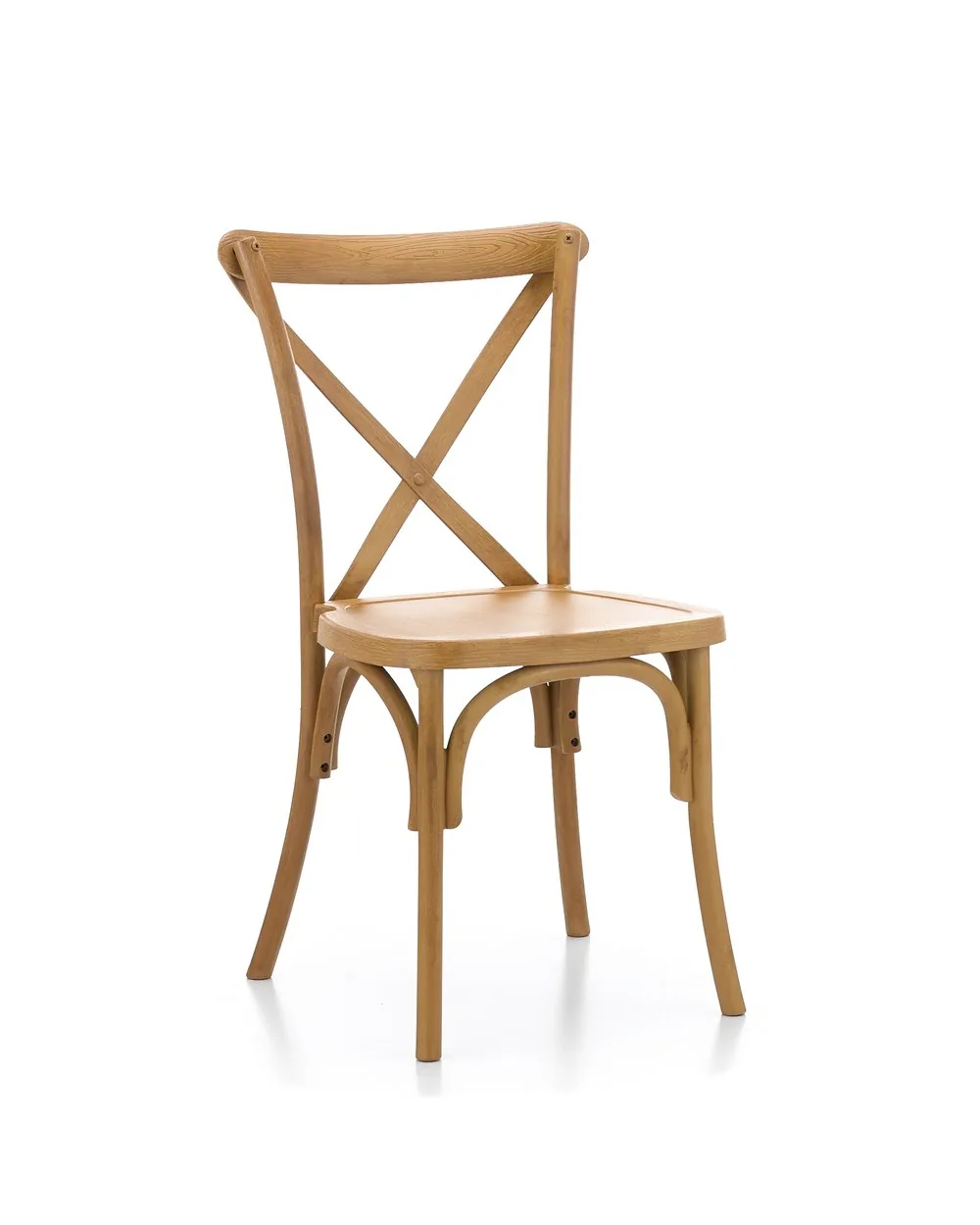
Every chair we produce — Chiavari, Phoenix, Bentwood, Cross Back and Louis — is either a one-piece PP moulding or a PP frame with a wood-grain finish. We do not produce solid hardwood or metal-frame banquet chairs, and we tell buyers that plainly rather than quoting something we cannot make well.
The reason is simple economics. Our customers are rental companies, hotels and distributors who need to replace a damaged chair years later and have it match the batch they bought before. Moulding in-house means the colour is controlled at the same source every time, so a replacement pallet drops into an existing fleet without looking like a different chair. That consistency is hard to achieve across separate timber or powder-coating suppliers.
It also means we can put a twelve-month production guarantee behind the frame: if a chair fails structurally in normal use, we replace it. That offer is only possible because there is no joint in the chair to fail.
Frequently asked questions
Is a PP resin chair strong enough for adult guests?
Yes. A one-piece polypropylene frame distributes load through the moulding rather than through joints, and the absence of fasteners removes the usual failure points. Our Chiavari frame is specified for normal adult seating in banquet and rental use. If you have a specific load rating requirement for a tender or venue contract, tell us and we will confirm the figure in writing for the model you are considering.
Do plastic banquet chairs look cheap next to wooden ones?
A gloss-moulded chair with a flat single-colour finish can look inexpensive. A metallic-look or wood-grain finish applied to the same mould reads very differently, especially under warm uplighting. The silhouette does most of the work — a Chiavari or Cross Back profile is recognisable regardless of material.
Can a damaged PP chair be repaired?
Scuffs and scratches are cosmetic and do not affect the structure, so they can usually be left alone or touched up. A cracked frame is not economically repairable, but because there are no joints it also will not develop the slow loosening that wooden chairs do — failures are visible and immediate rather than progressive.
Which material lasts longest in a rental fleet?
In our experience PP lasts longest per unit of maintenance, mainly because there is nothing to tighten, nothing to dry out and nothing to rust. Wood lasts well in dry storage and light use but needs joint checks. Metal lasts well until the coating is breached, at which point corrosion moves quickly.
Do you supply samples before a volume order?
Yes. We can send a sample chair in the model and finish you are evaluating, with freight quoted separately. For buyers comparing materials, ordering one PP sample alongside a wooden chair you already own is usually the fastest way to feel the weight difference.